
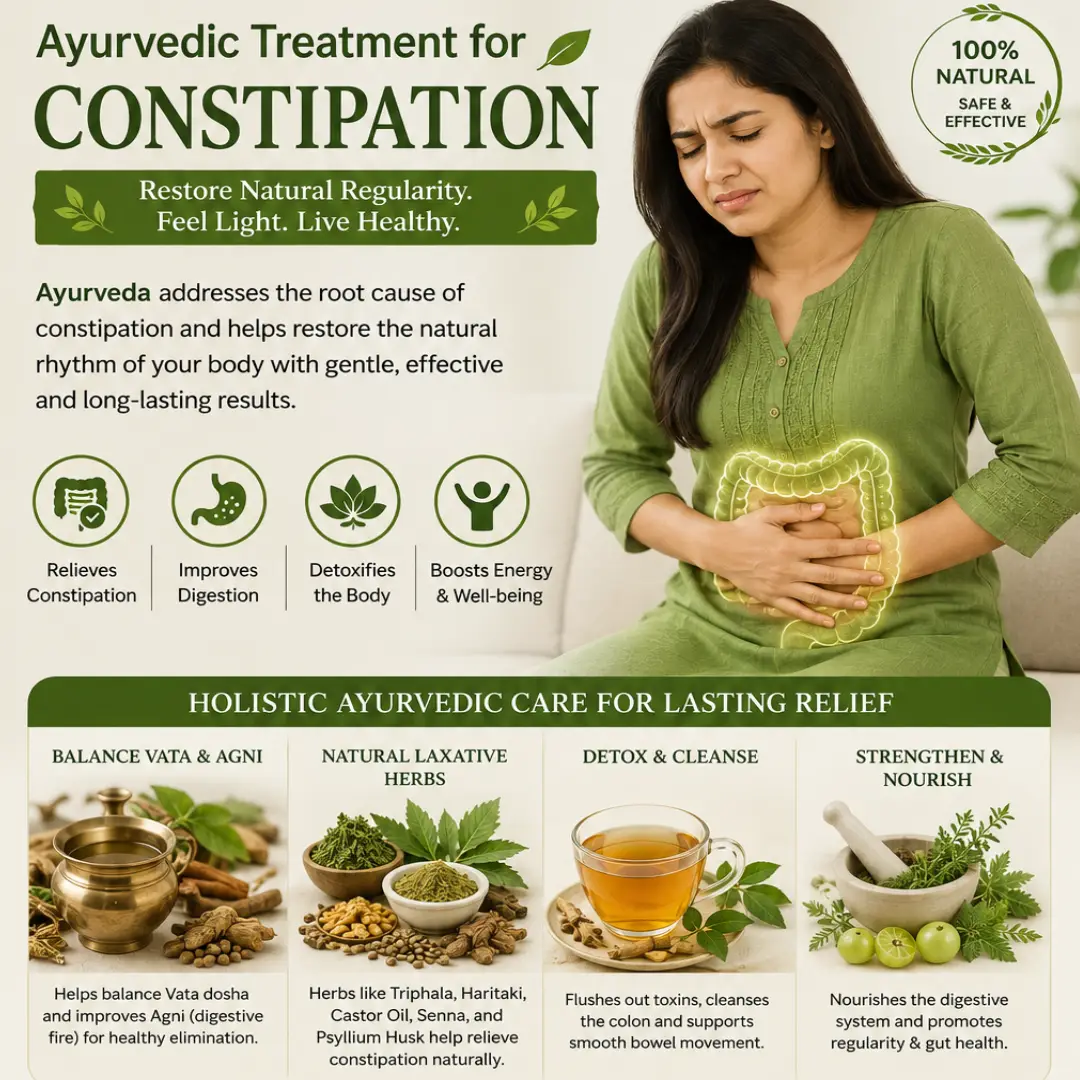
Constipation is one of those health issues many people quietly live with, often dismissing it as “normal” until it starts affecting daily comfort, energy, and even mood. While laxatives may offer temporary relief, they don’t address why the problem keeps recurring. Ayurveda takes a different route — looking at constipation not as an isolated issue, but as a sign of deeper imbalance in digestion and bodily rhythm.
In this article, we’ll explore how Ayurveda understands constipation and the natural approaches it offers for gentle, lasting relief.
What Is Constipation?
Constipation refers to infrequent bowel movements (typically fewer than three times a week), difficulty passing stool, or a feeling of incomplete evacuation. Common signs include:
- Hard, dry, or lumpy stools
- Straining during bowel movements
- Bloating and abdominal discomfort
- A feeling of incomplete bowel emptying
- Reduced appetite
- Fatigue or sluggishness
Occasional constipation is common, but when it becomes a recurring pattern, it’s worth addressing at the root.
The Ayurvedic Perspective on Constipation
In Ayurveda, constipation is primarily linked to an imbalance of Vata dosha, the energy responsible for movement in the body — including the movement of stool through the intestines. When Vata is aggravated, it can lead to dryness and irregularity in the digestive tract, resulting in:
- Dry, hard stools
- Irregular bowel movements
- Gas and bloating
- Abdominal discomfort
This condition is referred to as Vibandha in classical Ayurvedic texts. Contributing factors, according to Ayurveda, include:
- Weak or irregular Agni (digestive fire)
- Excessive intake of dry, cold, or processed foods
- Inadequate water intake
- Irregular eating and sleeping patterns
- Suppressing natural urges (like delaying the urge to pass stool)
- High stress levels, which aggravate Vata
- Lack of physical movement
Ayurveda’s approach focuses on pacifying Vata, improving digestive fire, and restoring the body’s natural elimination rhythm — rather than simply forcing a bowel movement.
Ayurvedic Herbs Traditionally Used for Constipation
Several herbs and formulations are commonly used in Ayurveda to support healthy bowel movements:
- Triphala – A well-known classical blend of three fruits, traditionally used to support gentle, regular elimination and overall digestive health
- Isabgol (Psyllium Husk) – Adds bulk to stool and supports smooth movement through the intestines
- Castor Oil (Eranda) – Used in small quantities in traditional practice for occasional relief
- Haritaki – One of the key ingredients in Triphala, valued for its digestive and mild laxative properties
- Saunf (Fennel Seeds) – Supports digestion and reduces bloating
- Ghee (Clarified Butter) – Used in small amounts, particularly beneficial for Vata-related dryness
These are typically recommended in specific forms and dosages tailored to the individual, rather than used generically.
Dietary Recommendations (Ahara) for Constipation Relief
- Increase fiber-rich foods – Whole grains, fresh fruits, and vegetables support healthy bowel movements
- Stay well hydrated – Drink warm water through the day, especially first thing in the morning
- Include healthy fats – A small amount of ghee or oil in meals helps lubricate the digestive tract, especially helpful for Vata-related dryness
- Eat warm, cooked meals – Easier to digest than cold or raw foods, especially for those with a Vata imbalance
- Limit dry, processed, and packaged foods – These tend to aggravate Vata and worsen dryness in the gut
- Soaked raisins or dried figs – Traditionally soaked overnight and eaten in the morning to support bowel regularity
- Avoid excessive tea, coffee, or carbonated drinks, which can worsen dehydration and Vata imbalance
Lifestyle Practices (Vihara) That Support Regularity
- Follow a consistent daily routine (Dinacharya) – Regular meal and sleep timings help stabilize digestion
- Don’t suppress the urge to pass stool – Ayurveda considers this an important cause of Vata aggravation and constipation
- Stay physically active – Regular movement, even a daily walk, stimulates healthy bowel function
- Practice gentle yoga – Poses like Pawanmuktasana (wind-relieving pose) and seated twists can support digestion
- Manage stress – Practices like pranayama and meditation help calm Vata and support the gut-mind connection
- Establish a morning routine – Try to have a bowel movement at the same time each day to train the body’s natural rhythm
Simple Home Remedies Rooted in Ayurveda
- A glass of warm water first thing in the morning on an empty stomach
- Soaked raisins or 2-3 soaked figs eaten in the morning
- A teaspoon of ghee mixed with warm milk before bedtime (best suited for those without dairy sensitivity)
- A pinch of roasted cumin powder with warm water after meals to support digestion
(These are general wellness practices. For persistent constipation, a personalized assessment is recommended rather than relying on home remedies alone.)
When to Seek Professional Guidance
While occasional constipation often responds well to dietary and lifestyle changes, please consult a doctor if you experience:
- Constipation lasting more than three weeks
- Severe abdominal pain
- Blood in stool
- Unexplained weight loss
- Alternating constipation and diarrhea
- Constipation accompanied by vomiting
These symptoms may indicate an underlying condition that requires proper medical evaluation.
Why Choose Ayurveda for Constipation?
Unlike quick-fix laxatives that can sometimes lead to dependency over time, Ayurveda focuses on identifying and correcting the underlying cause — whether it’s Vata imbalance, weak digestive fire, poor diet, or lifestyle habits. This root-cause approach, combined with personalized herbs and daily routine changes, supports not just relief from constipation but improved digestion and overall well-being over time.
Take the First Step Toward Regular, Comfortable Digestion
If constipation has become a recurring struggle, a personalized Ayurvedic consultation can help identify what’s really going on beneath the surface — and guide you toward a natural, sustainable solution tailored to your body type.
Book a consultation with our Ayurvedic experts today and take the first step toward better digestive health.